
How Founders Can Generate Demand for Their Products
Learn how founders can create demand by shaping the activities, occasions, use cases, and customer behaviours that make a product easier to adopt.

Founders are often told to find an existing customer problem, build a useful solution, and market it well. It’s sensible advice but also just one way to do it.
Some of the most successful businesses took a different route.
They did not merely promote the product more aggressively. They encouraged an activity or occasion to support more use of the product or simply followed customer behaviour towards a stronger use case.
These founders understood that demand can grow when a business creates the conditions that make its product relevant, valuable, and easy to adopt.
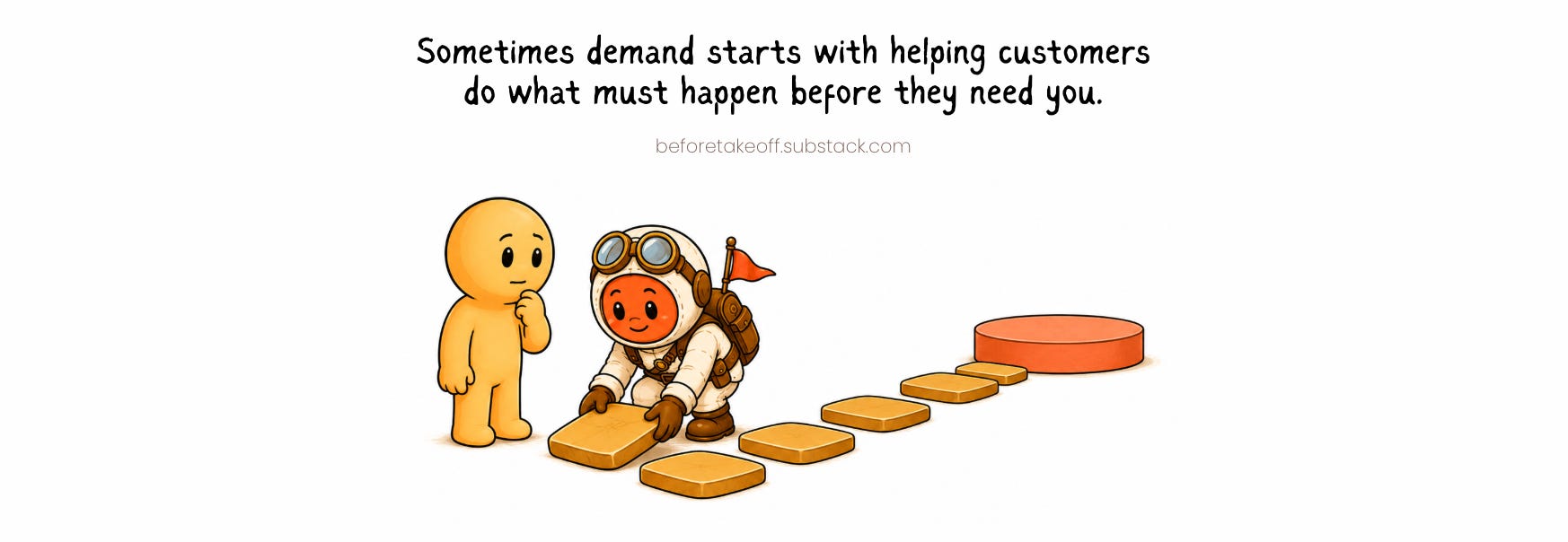
For an early-stage founder, this opens a more valuable question than “How do I convince more people to buy?”. Instead, think:
What would need to become easier, more common, or more valuable for customers to naturally want more of what I sell?
Michelin Did Not Only Sell Tyres. It Encouraged Driving
At the beginning of the twentieth century, France had fewer than 3,000 cars.
That created an obvious limit for tyre manufacturers Michelin. People could not wear out more tyres if they were barely driving.
The company could have concentrated on proving that its tyres were better. Instead, Michelin helped make driving more practical and appealing.
The Michelin Guide gave motorists maps and information about petrol stations, hotels, mechanics, and places to visit. The restaurant-rating system for which the guide later became famous developed after that.
The commercial logic was indirect but powerful: Make travel easier and more desirable. People take more journeys. Their tyres wear out. Demand for replacement tyres grows.
Michelin did not only compete for the tyre purchases already available. It helped expand the activity that created those purchases.
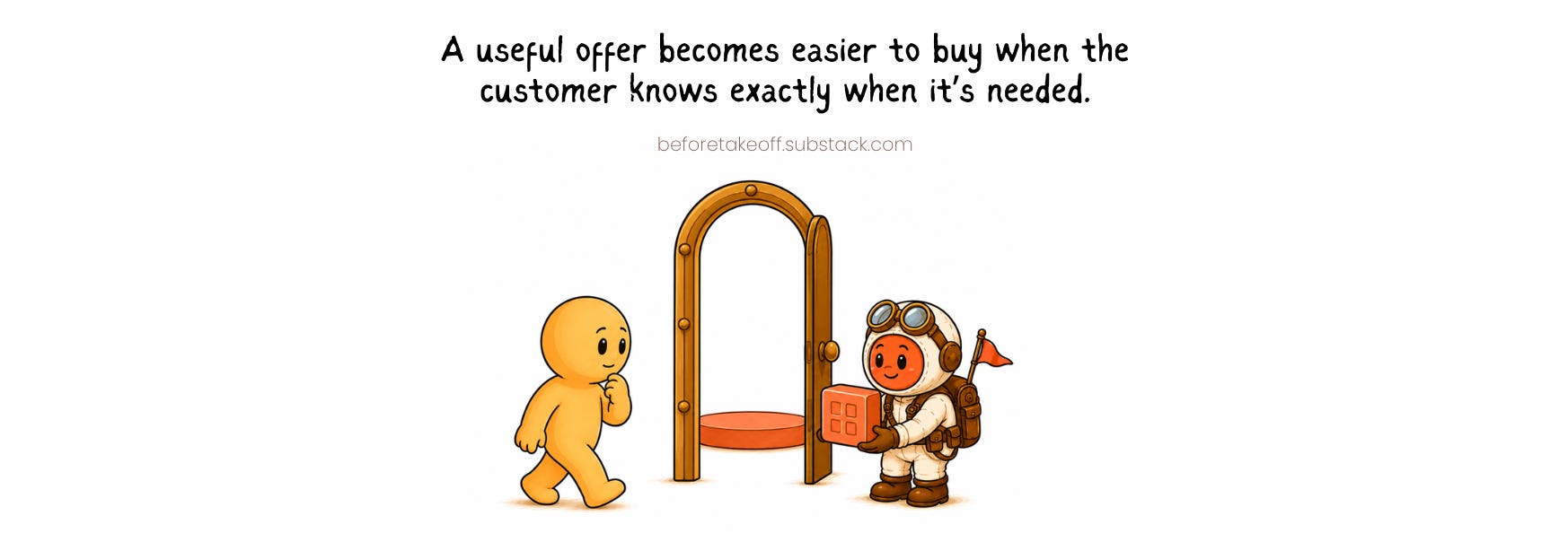
This matters because many businesses depend on a behaviour that happens before customers need the product.
A bookkeeping platform depends on businesses maintaining their financial records.
A marketplace depends on enough buyers and sellers participating.
A customer-research service depends on founders recognising that customer understanding deserves attention before another product overhaul.
When that earlier activity is weak, the product’s market may remain small regardless of how polished or effective it becomes.
The founder may need to support the behaviour before expecting to capture the purchase.
Some Products Need an Occasion, Not Another Feature
Products become easier to remember and buy when customers know exactly when they belong.
De Beers famously connected diamonds with engagement and long-term romantic commitment through its “A Diamond Is Forever” campaign.
The company was not merely explaining the physical qualities of a gemstone. It attached the product to a highly recognisable life event and gave the purchase a specific social meaning.
There are serious ethical problems with creating demand through social pressure, fear mongering or encouraging insecurities, and founders should not copy that part of the strategy.
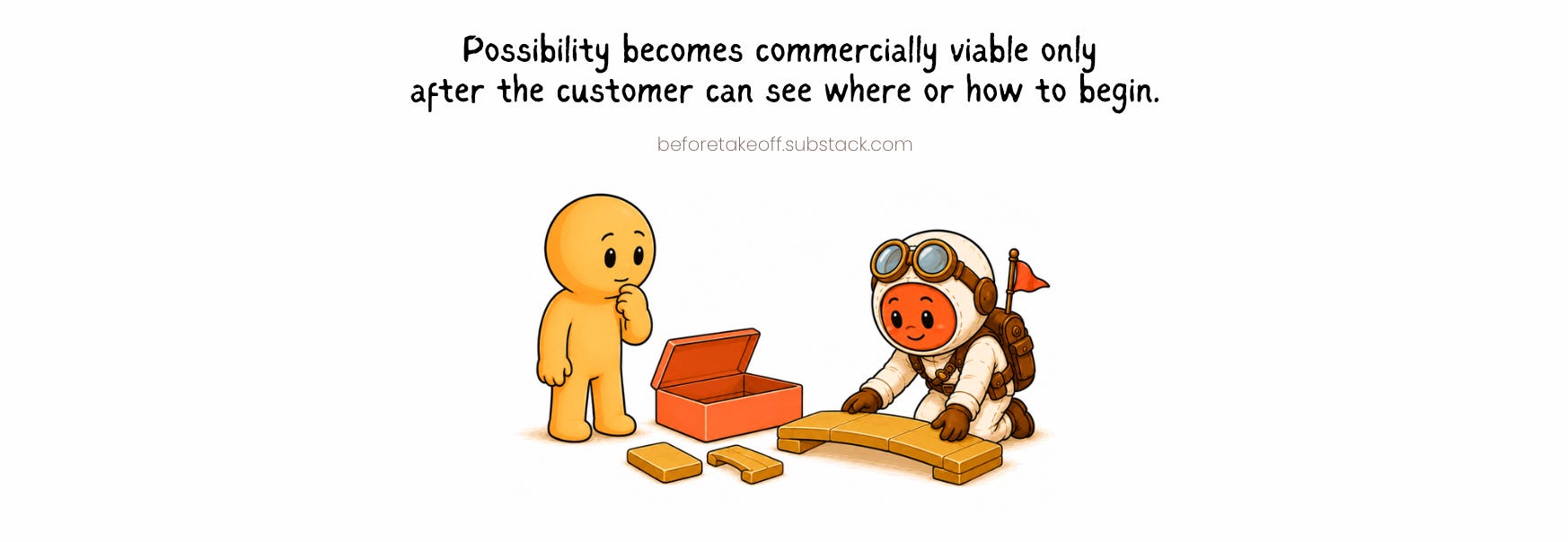
But the underlying commercial mechanism is still useful to understand. Which is that a product that is generally helpful can remain easy to postpone, while a product connected to a clear moment becomes easier to consider.
For example:
A consultant may connect a strategic review to the moment a business prepares to expand into a new market.
A software product may become particularly relevant when a company hires its first employees, starts serving larger clients, or reaches the limits of spreadsheets.
A founder membership may be most valuable during beta, first sales, or the difficult transition from scattered customers to a repeatable business.
The founder is no longer presenting an offer that could be useful at some vague point in the future. They are helping the customer recognise the exact situation in which it becomes useful today.
Demand often strengthens when the customer understands not only what a product does, but when it belongs in their world.
Arm & Hammer and Jell-O Removed the Imagination Requirement
A highly flexible product can look valuable to its creator and yet unusable to everyone else. While the founder sees possibility, the customer often sees confusion, complexity, or a blank canvas.
Arm & Hammer baking soda could be used for far more than baking, but customers did not automatically imagine all those uses. The company created guides showing how the product could help with cleaning, laundry, refrigeration, camping, and other household situations.
Jell-O faced a similar problem. Packaged gelatin was unfamiliar and abstract. Recipe books turned it into recognisable meals and desserts customers could recreate.
Neither company waited for customers to become more imaginative. They made the product’s possible value visible.
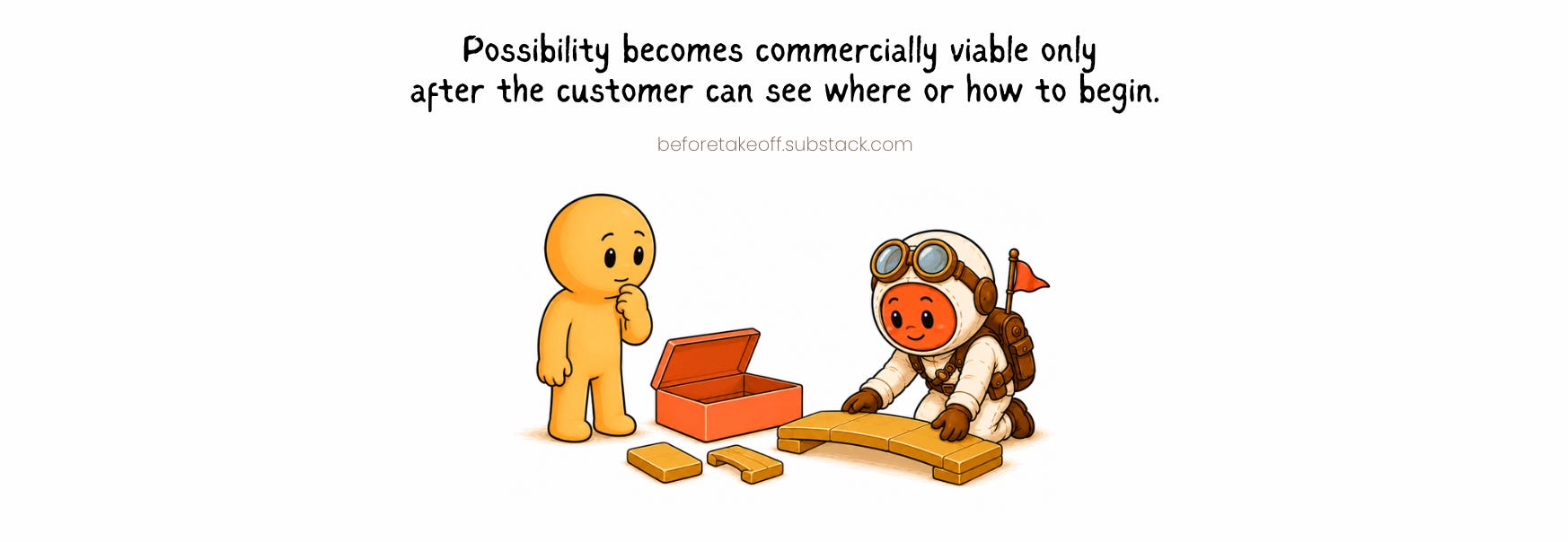
Early-stage founders frequently underestimate this adoption barrier:
A SaaS founder may promote a platform with dozens of potential workflows while users remain unsure which one to try first.
A consultant may offer completely customised support while prospective clients struggle to identify what they should hire them for.
A digital product may contain extensive knowledge but provide no obvious first outcome.
The multi-facets and possibilities of how to use your product become commercially valuable only after the customer has found a useful starting point. Before that, it can create confusion.
A recipe, template, guided use case, starter package, or specific scenario can sometimes generate more demand than another round of product development because it reduces the work required to experience the value.
Customer “Misuse” Can Reveal What the Product Should Become
Founders are naturally attached to the use case they designed, and any unexpected customer behaviour can feel like a misunderstanding.
The product that became Play-Doh began as a compound used to remove coal soot from wallpaper. As coal heating declined and washable wallpaper became common, the original market weakened. The company later noticed the material being used by children for modelling and repositioned it around that stronger use.
Kleenex also began elsewhere. It was initially promoted as a way to remove cold cream before customer behaviour helped reveal a larger use as a disposable handkerchief.
In both cases, demand was not strengthened by relentlessly promoting the product’s intended purpose but by following what customers were already making useful.
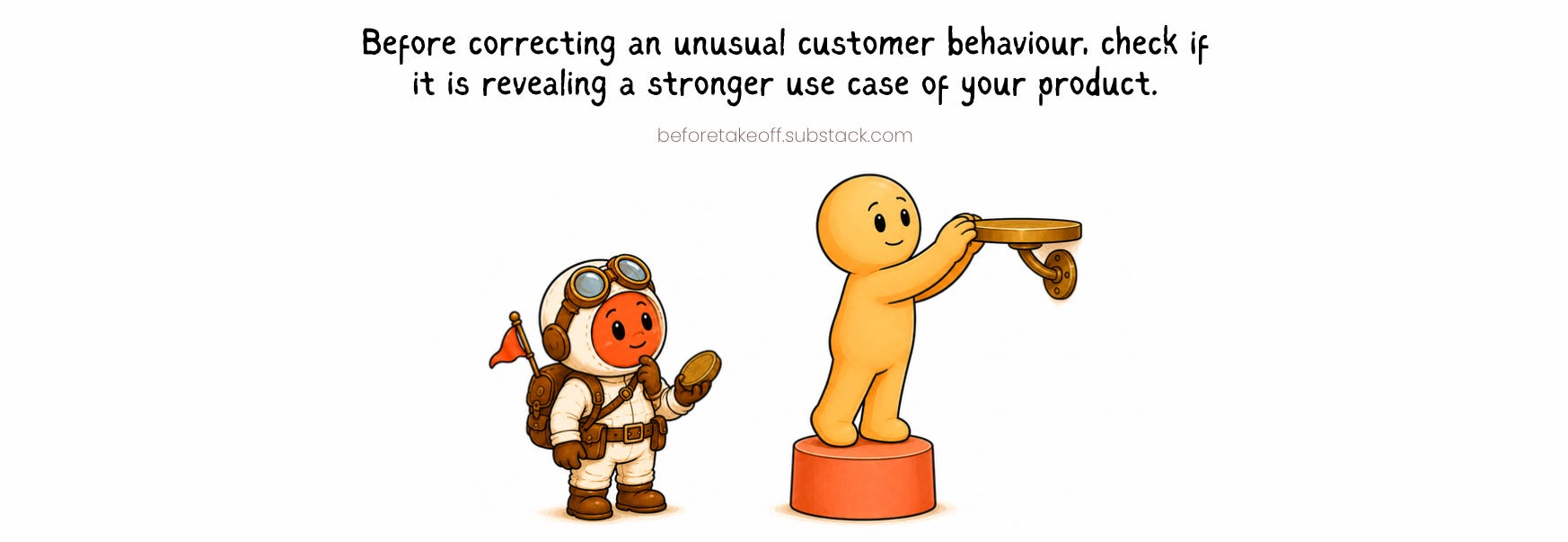
This can happen on a much smaller scale inside an early-stage business:
Customers repeatedly use one feature the founder considered secondary.
Buyers value the diagnostic part of a service more than the larger implementation package.
Members join for broad education but remain because of the community or one practical form of access or support.
A product attracts a different customer group, use case, or purchase occasion from the one originally expected.
One unusual behaviour is not enough to change the business. But repeated customer behaviour deserves attention.
Your target market may be revealing a more urgent problem, a more frequent use, or an easier route to adoption than you envisioned.
Demand Generation Can Start with the Customer’s World
The common thread across these businesses is not clever marketing.
Michelin supported the activity that consumed its product. De Beers attached a discretionary purchase to a recognisable occasion. Arm & Hammer and Jell-O made possible uses concrete. Play-Doh and Kleenex followed customer behaviour.
Each business looked beyond the product itself.
That is the more useful demand-generation lesson for a solo or bootstrapped founder. You may not have the resources to manufacture a new cultural ritual or reshape an entire industry. You probably should not try.
But you can look for the smaller condition currently standing between the customer and the product:
The activity that is not happening often enough to justify usage
The moment when the need becomes active
The first use occasion or trigger that remains unclear
The adoption work the customer is being asked to complete
The unexpected behaviour pointing towards a stronger use case
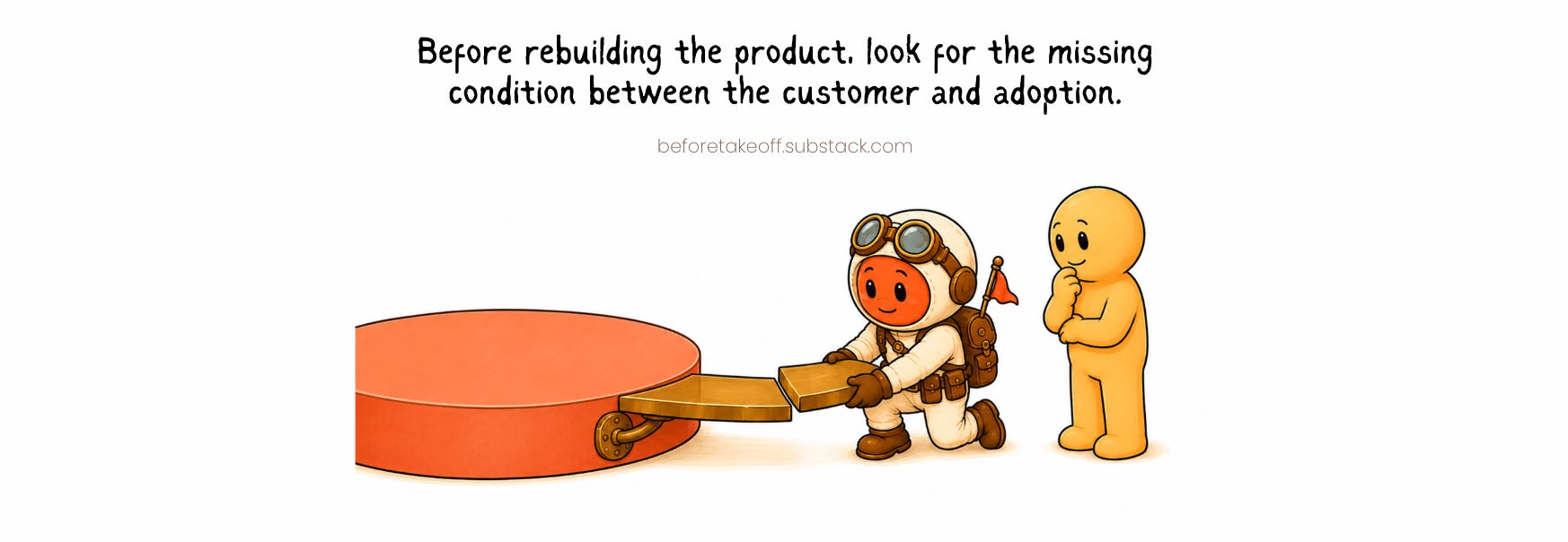
Choose the condition most closely connected to your current offer and customer. Then make one proportionate move to improve it.
That might mean
producing one practical guide that supports the activity before the purchase,
positioning the offer around a recognisable business moment,
creating a starter workflow for the strongest use case, or
observing what existing customers repeatedly do without rushing to correct them.
New founders often assume weak demand means the product needs more features, more content, or more persuasive marketing. But the missing piece to the low customer adoption puzzle may sit outside the product.
Great demand generators do not only ask how to sell more of what they have built. They look at what must change in the customer’s world for the product to become a more natural next move.
🧠 If today’s article resonated, you may want to read these next: