
The Founder Visibility Treadmill: Why Being Seen Is Not Enough
Why more visibility does not always create more sales, and how early-stage founders can use repeated market exposure to distinguish low visibility from poor product fit.

Many early-stage founders assume customer attraction follows a simple sequence: Get seen → Build an audience → Turn audience into customers.
So when sales is stuck or inconsistent, they ramp up on visibility. They publish more often, add another platform, attend more events, accept more podcast invitations, and try to stay constantly present in front of the market.
With all that effort, the business did become more visible, but the founder also becomes more tired while revenue barely moves.
This is what I call the Visibility Treadmill: Increasing the volume of exposure without meaningfully improving the desired outcome.

This is not to dismiss visibility as superficial or optional. An early-stage business needs to be seen before it can be understood, trusted, considered, or bought.
It also needs to be seen by enough of the right people, often enough, before the founder can tell whether weak sales come from low visibility, a cold audience, poor positioning, insufficient trust, or poor product fit.
Building visibility therefore has two main missions to accomplish:
It helps suitable customers discover the business.
It also gives the founder enough market response to diagnose whether their idea or productive is attractive enough.
The problem begins when founders keep increasing visibility without using the response to learn what needs fixing.
You Cannot Diagnose a Product from an Empty Market
When very few suitable customers have encountered an offer, weak sales doesn’t always mean that the product is not good.
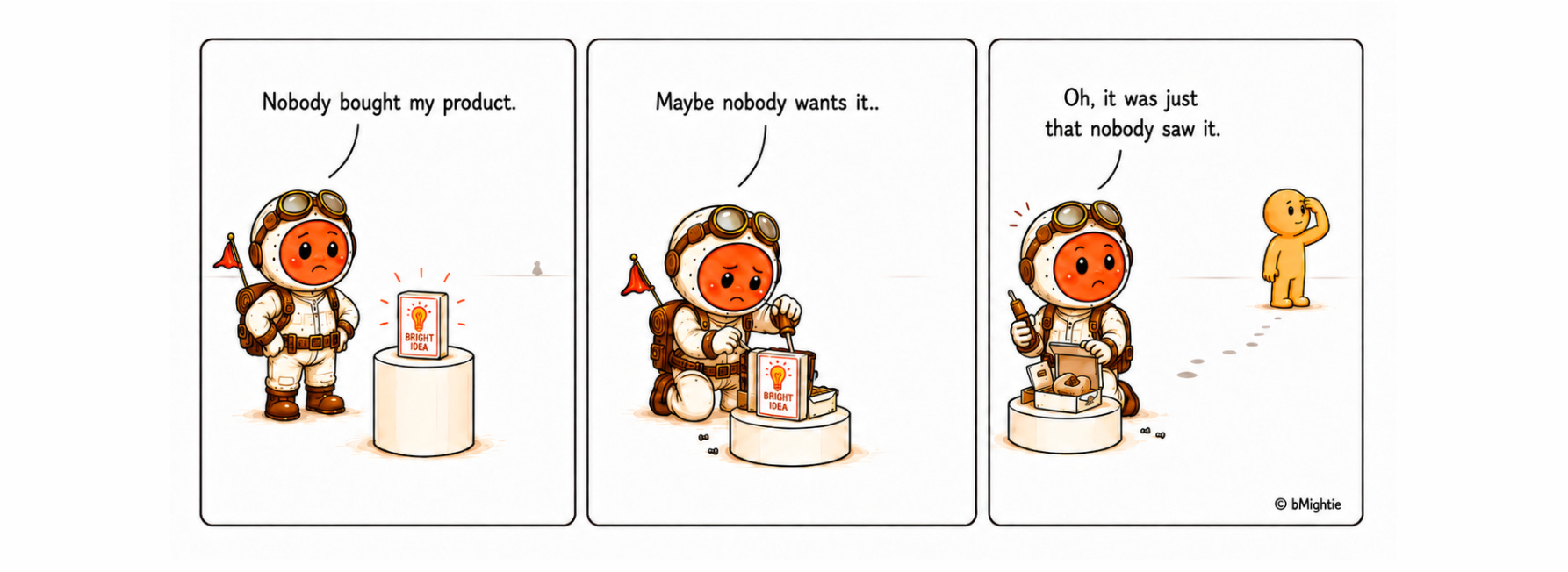
The business may solve a valuable problem, but not enough relevant people know it exists. The founder may have shared the offer a few times, received little response, and concluded that the market does not want it.
Before judging market demand, the founder needs enough qualified exposure to observe how suitable customers respond.
Do they stop and pay attention?
Do they recognise the problem easily and value solving it?
Do they ask questions out of interest or confusion?
Do they describe the situation using similar language?
Do they show enough interest to investigate, trial, discuss, or buy?
Until enough right-fit customers have had a genuine opportunity to respond, the founder cannot confidently distinguish between a visibility problem and a product-fit problem.
This distinction matters because the wrong diagnosis can lead the founder down the wrong path. And for solo and bootstrapping founders, wrong paths can be fatal.
A founder who mistakes low visibility for poor product fit may rebuild the offer, add features, change the customer, lower the price, or abandon a valuable idea before the market has properly encountered it.
Another founder may make the opposite mistake. They receive plenty of qualified exposure but weak customer response, then continue posting more because admitting that the offer may need work feels harder.
Both founders are reacting to weak sales. Only one of them primarily needs more visibility.
You Cannot Launch to an Audience That Does Not Exist
Founders often treat their product or business launch as the moment visibility begins.
They build their product quietly, publish an announcement on social media, and expect the market to respond.
But a launch does not create an audience on demand. It activates whatever audience, familiarity, trust, and recognition the founder has already built.
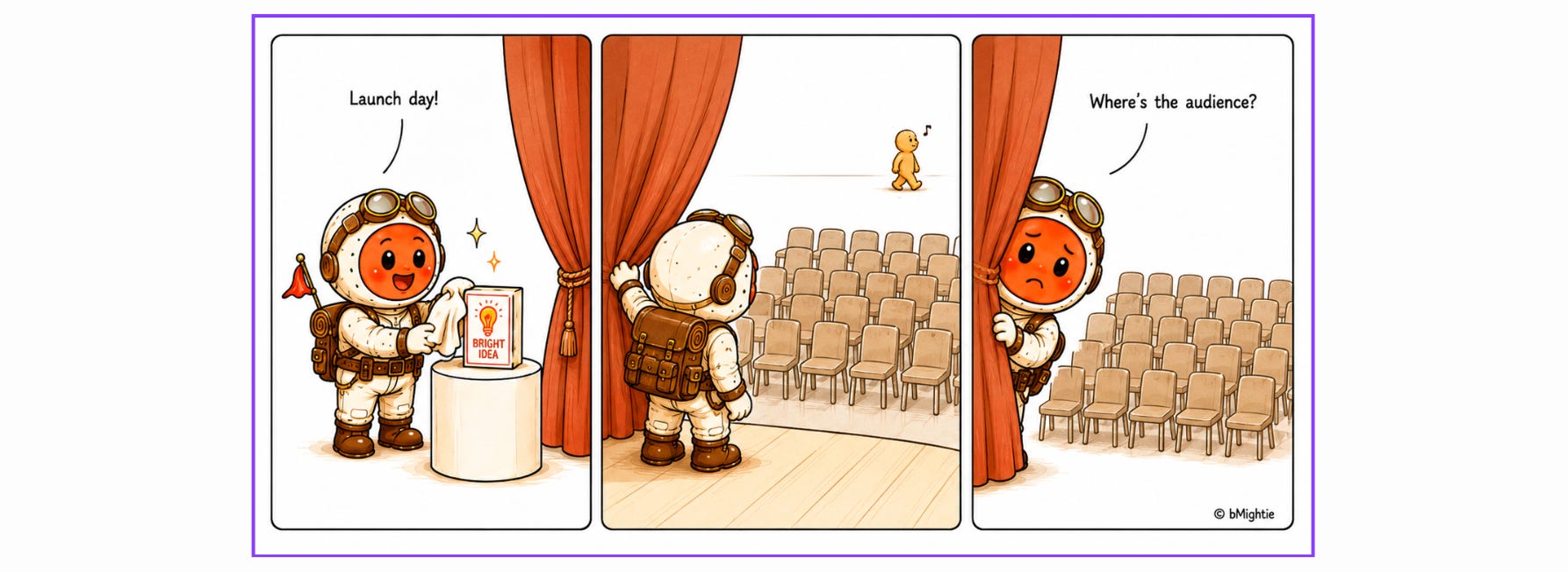
When almost nobody suitable knows the business exists, the launch is not really testing demand. It is testing whether one announcement can reach and convert complete strangers. That’s a tall order.
Even if the brand has gathered followers over time pre-launch, the audience may still be commercially cold. Customers may recognise the founder’s name without understanding the business or they may enjoy the content without associating the offer with a specific problem.
When the launch receives a weak response, the founder naturally concludes that the market is not interested.
But the market may not have rejected the offer. It may barely have processed it.
A launch works better when suitable customers have already encountered the business through customer conversations, useful content, beta invitations, partnerships, referrals, events, demonstrations, or earlier discussions of the problem.
By launch, both the business and the offer should not feel entirely new to everyone.
A launch should just need to activate an audience, not introduce the business to strangers and ask them to buy in the same breath. The strongest launches often convert existing recognition into action.
Reaching the Right People Once Is Usually Not Enough
Building visibility is not only about growing your audience size. It is also about staying top of mind and establishing rapport and relevance to what your audience cares about.
A suitable customer may see the business once and continue scrolling. They may notice the founder’s name but forget what the business does. They may understand the offer but have no immediate need. They may become interested, then hesitate because the business still feels unfamiliar.
One encounter creates exposure.
Repeated relevant encounters create familiarity.
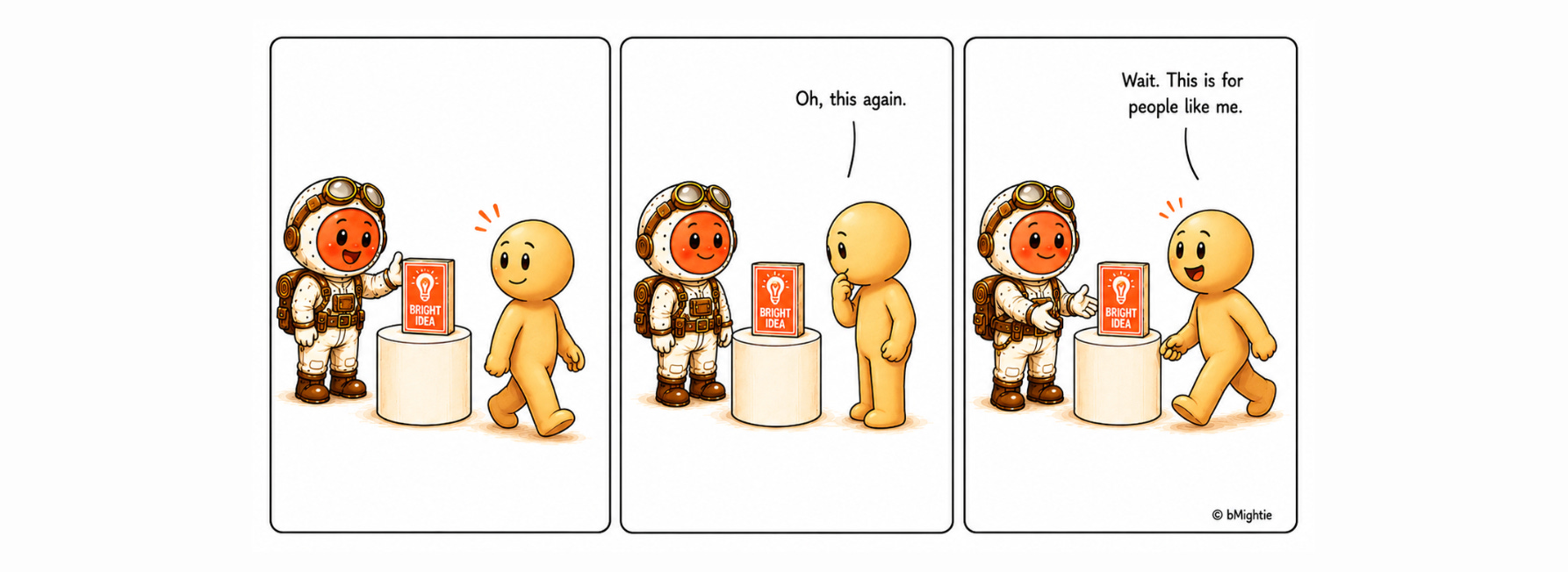
Familiarity helps the customer remember what the business is associated with. It gives them more chances to understand the problem, notice the value, observe the founder’s judgment, see proof, and return when the timing becomes right.
The right audience still needs to repeatedly encounter the same problem reminder, offer explanation, and value proposition. Despite that, many founders change their message so often that nothing ends up sticking.
The content may get seen, but brand perception keeps resetting.
Regular visibility becomes commercially useful when each encounter strengthens an existing association for their customers such as:
This founder understands my problem.
This product helps my kind of profile.
This business creates this result for people like me or use cases like mine.
This is where I would go when that need becomes urgent.
Useful visibility compounds. Unfocused visibility dissipates.
Visibility is Also Market Research
Organic visibility growth is often being misinterpreted as market demand.
A post reaches thousands of people. Followers increase. Profile views rise. The founder receives messages such as:
“This is so useful.”
“I love what you are building.”
“You explain this brilliantly.”
These signals can show that the founder and brand are becoming known. But they do not automatically mean that the offer is commercially relevant.
Visibility is better understood as the first input in a longer sequence:
Seen → Recognised → Deemed Relevant → Trusted → Considered → Acted on
The potential customer first encounters the business.
They then need to recognise that it relates to their situation, understand why it matters, trust the business enough to explore further, and see a credible next step.
The business can lose them anywhere along that path.
When suitable customers rarely encounter the business, the conversion constraint may be visibility.
When they see it but do not recognise themselves, the problem may be targeting or messaging.
When they recognise the problem but do not care enough to act, the problem may be urgency, differentiation, or product fit.
When they want the outcome but hesitate to proceed, the constraint may be low trust, limited proof, high entry price, switching risk, or adoption friction.
This is why building visibility serves as market research.
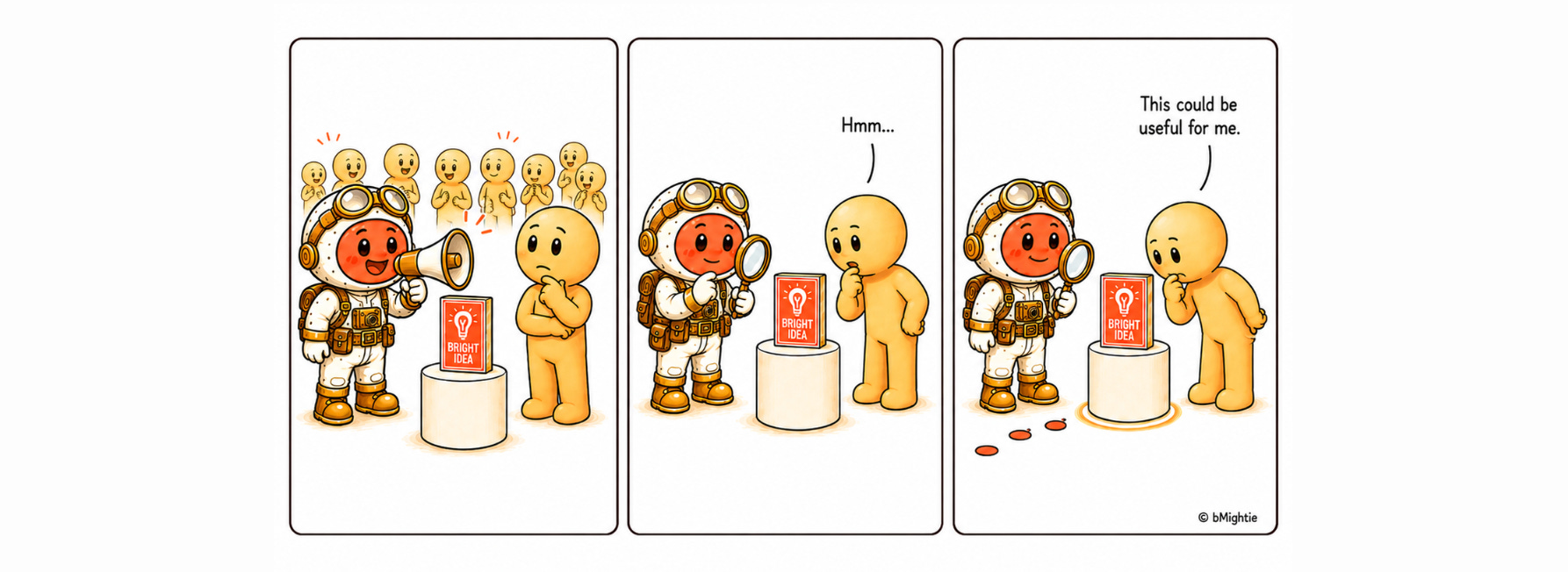
It does not merely increase the number of people who know the business exists. It creates observable customer behaviour that helps the founder understand where on the path from discovery to conversion is working or breaking.
The Visibility Treadmill Is Not the Same as Consistency
Regular visibility is necessary. The visibility treadmill begins when founders keep increasing output without improving:
who they are reaching
what they are becoming known for
whether they are becoming differentiated
whether trust is strengthening
whether the audience is becoming warmer
whether suitable customers are moving closer to purchase
whether the response is generating insights for a better way forward
The distinction is between repetitive consistency and compounding consistency.
Repetitive consistency means publishing regularly while the business learns very little and the audience forms no stronger association.
Compounding consistency means repeated market contact that improves recognition, sharpens the message, builds trust, reveals customer patterns, and creates valuable commercial momentum.
Step Off the Treadmill
Being undiscovered is a real business fire to be put out as soon as possible.
A founder cannot diagnose demand from a market that has barely encountered the offer. Enough qualified visibility is necessary to create a fair product test, uncover customer behaviour, and distinguish low exposure from poor product fit.
But being seen once is rarely enough either.
A cold audience may need repeated relevant contact before customers understand, remember, trust, and consider the business.
This means visibility must build both reach and familiarity with the target audience.
Once the business has sufficient repeated market contact, the founder must read what the exposure is revealing:
Are too few suitable customers encountering the business?
Are they seeing it once and forgetting it?
Are they seeing it repeatedly but failing to relate to it?
Do they understand the offer but lack urgency?
Are they interested but unconvinced until there’s more proof?
Do they begin moving forward and stall at the same point?
Visibility should make these distinctions clearer over time.
Choose the audience and offer you are currently testing. Decide what would count as enough relevant, repeated exposure to produce a meaningful operating cadence.
Then define what customer behaviour would suggest that you should keep building visibility, improve the commercial path, refine the offer, or reconsider the product fit.
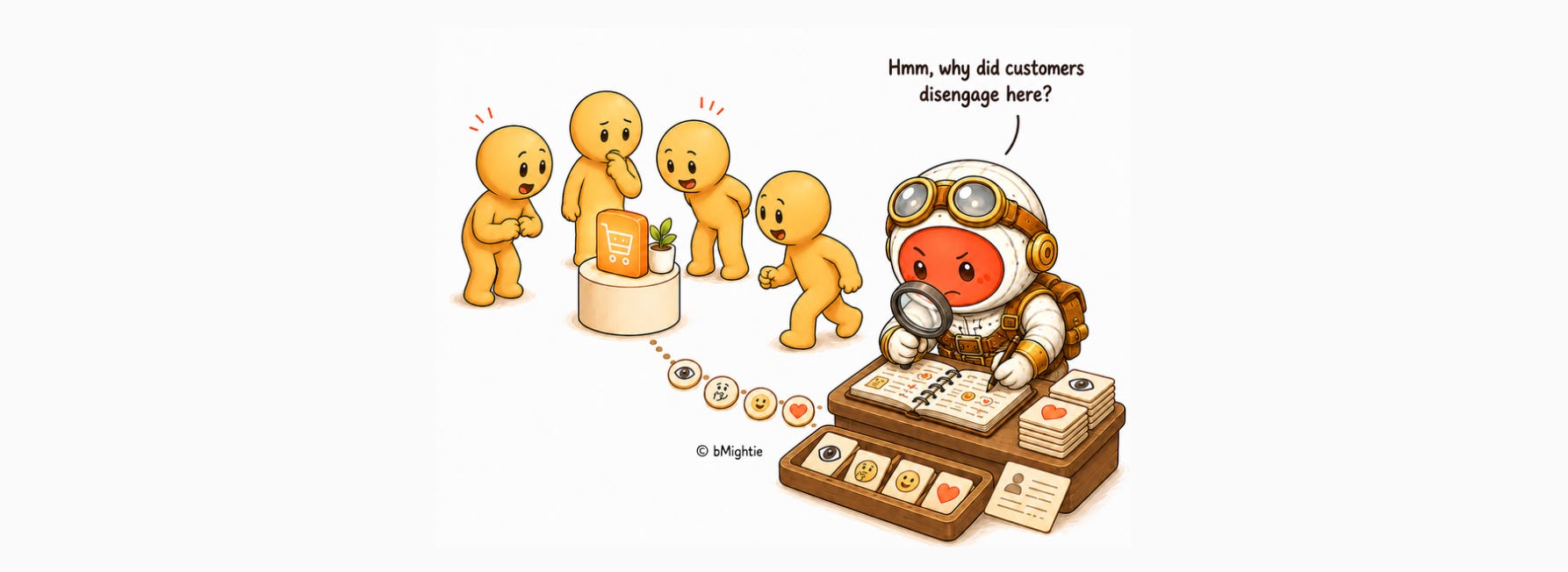
Building visibility earns you valuable market response. Your job as founder is to make sure that hard-earned response becomes business intelligence.
🧠 If today’s article resonated, you may want to read these next:
The Distribution Chasm: Why Founders Who Build in Silence Stay Invisible
Startup Math: What to Measure in the Early Days of Your Business
The Friend-Zoned Founder: When People Like You But Do Not Buy
Exactly! You have to be present enough to be found, and also at the right places. It’s not enough to only work on the product – that’s the connection point many early founders are missing.