

The Credibility Chasm Every Early Stage Founder Must Ultimately Bridge

I’ve watched brilliant products die in the cradle because of this. A founder built something incredible that make incumbent options pale in comparison. And yet, the client meetings keep ending in a “no”, or worse, the customer ghosts them.
The founder usually leaves these meetings convinced their product is broken or their pricing is off. But most of the time, the offer isn’t the problem.
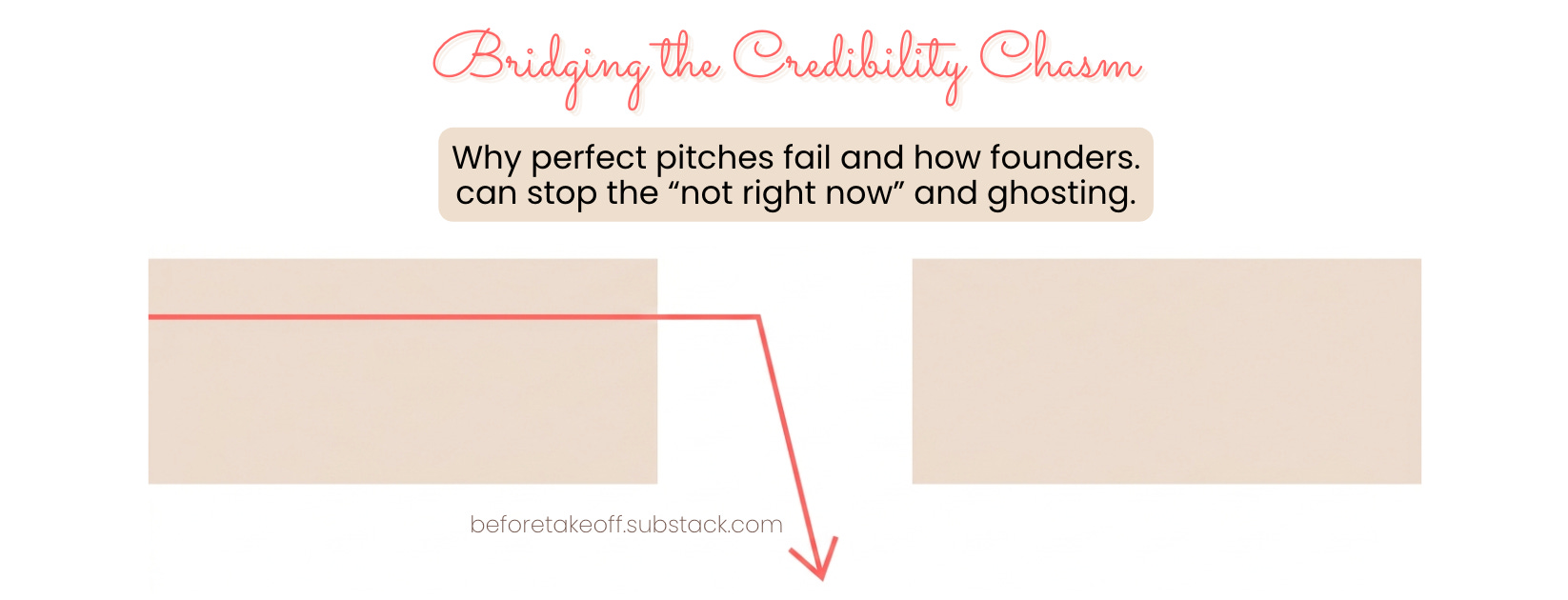
What’s missing is the bridge across the Credibility Chasm.
The Credibility Chasm is the distance between what you know you can deliver and what the market can verify. It is unavoidable for any new business and is not a reflection of your talent or your product’s capability.
My tough truth for founders in today’s Before Takeoff piece is:
Stop polishing a product or pitch that’s already good enough and start closing your credibility chasm instead.
Stop Polishing the Deck: Presentation is Not Proof
When founders sense a lack of trust from their audience, their knee-jerk reaction is to polish and refine. They’ll spend thousands on a website redesign, obsess for hours over the hex codes in their slide deck, and spend weeks refining the “perfect” pitch.
More often than not, the market isn’t asking if your slides are impressive. It is asking a subtler and more uncomfortable question: Has anyone else already said yes?
Founders default to polish because it feels like progress. It’s a task you can control and improve. But the market knows the difference between presentation and proof, even if it doesn’t articulate it.
The Power of One: Why You Only Need One “Reference-Quality” Win
As a new business, you don’t need fifty logos on your home page. You do need at least one “reference-quality” outcome that is specific, nameable, and, most importantly, repeatable.
The repeatability is what matters to the next buyer. It proves your first win wasn’t a fluke or a favour. In the B2B case, this means finding a first pilot that you’ll invest in disproportionately.
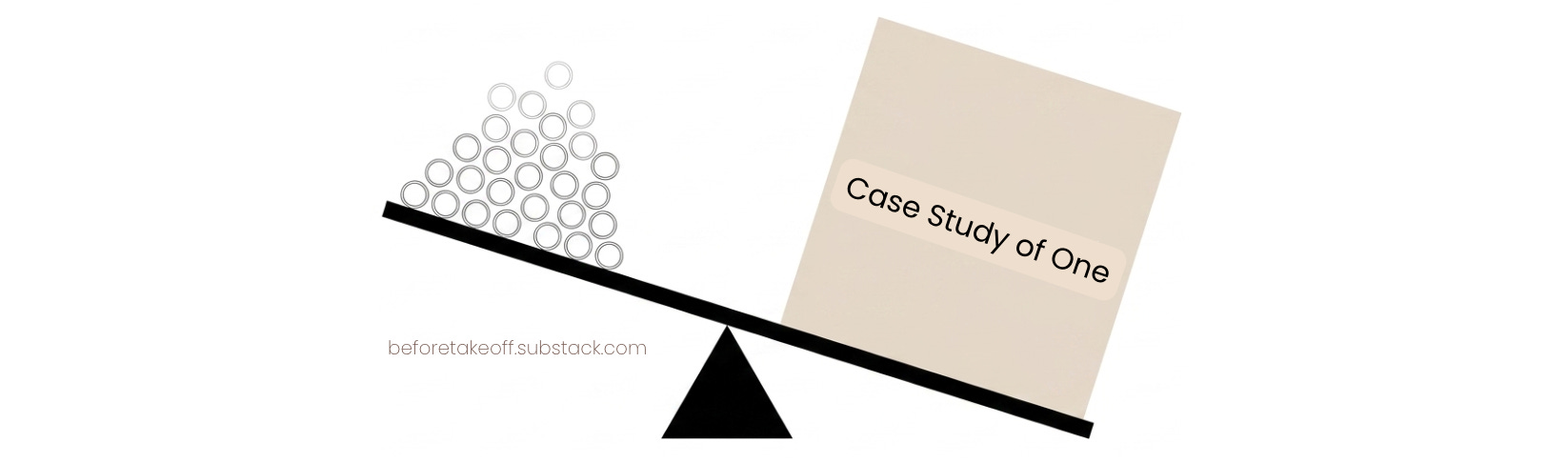
Especially if you are a founder with minimal to zero network in your target market, you will almost always have to serve a first customer for significantly less than the solution is worth just to earn the right to tell their story publicly.
You aren’t just winning a sale; you are buying your case study of one.
This case study is the most powerful number in your sales arsenal because it moves your startup out of the realm of theory and into the realm of evidence.
Be Known Before You Need to Be Trusted
If the first time a prospect encounters your brain is during a high-stakes sales pitch, you’ve already lost. You’re starting the conversation at zero trust.
The antidote is thought leadership. This is not tactical content marketing or becoming a lifestyle influencer. Thought leadership is the fruit of being genuinely engaged in the space you are building in.
When you publish your insights, speak at niche events, or engage publicly in the discourse of your industry, you create a digital trail of expertise. This is especially vital for the “network-less” founder who feels isolated.
By the time you get to a sales call, the buyer should feel like they’ve already understood your thinking. You want to arrive in the room with credibility already established, rather than having to establish credibility during the call while also trying to sell your solution.
Waiting for Proof: Why Interested Buyers Go Quiet
In sales, be it B2B/Enterprise or B2C, the Credibility Chasm is a gap all new businesses have to bridge. To do so, founders must understand the buyer’s psychology.

Understand Your B2B/Enterprise Champion
When you are an unproven business, your B2B/Enterprise customer is thinking: “If I recommend this startup and they go bust in six months, how does that reflect on me to my manager?”
When you don’t provide logos, case studies, or nameable references, you are asking that champion to gamble their professional reputation on you. Most won’t. You close the chasm when you give the buyer the tools to defend their choice to their boss.
Your job isn’t to sell a product; it’s to make your champion look like a hero for discovering and endorsing you.
Navigating the B2C Trust Landscape
In B2C, the chasm is often invisible, but no less deadly. Consumers can’t see call your references, so they look for social cues that suggest others have already found your product worth paying for. These cues come in the form of social media followers, testimonials, and a pool of past transactions and ratings.
I see too many founders who are masters of their craft, but exist almost in a digital void. They believe their expertise or craftsmanship speaks for itself. It doesn’t.
Passion and depth of knowledge do not transfer through a website with zero reviews or a social account that hasn’t been updated since last year. In the consumer world, trust accumulates through the visible choices of other people, not through your own assertions of quality.
Borrowing Trust: The Strategic Value of the Warm Intro
One of the fastest ways to bridge the chasm is to “import” credibility. This is the tactical purpose of the warm introduction.
A cold pitch forces the buyer to evaluate you from scratch, which is a high-friction, high-risk, and high-effort process. A warm intro means a trusted party has already done the trust assessment for them.
Your most important sales infrastructure isn’t your CRM or your automated email sequence; it’s a small set of people who understand your vision and can act as credibility amplifiers for you and your solution.
Conclusion: Paying the Early-Stage Tax
The Credibility Chasm is the tax every founder pays for being an early stage business. If you don’t pay it through social proof and thought leadership, you’ll pay it in lost time and missed market share.
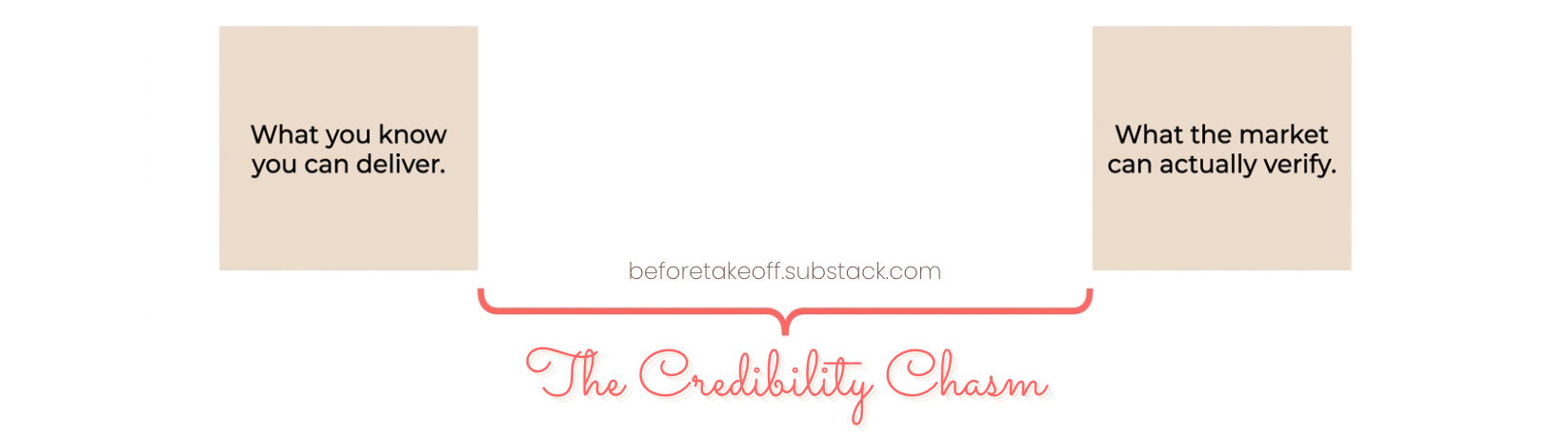
Every decision and action you make today, be it the pilot you accept, the article you publish, or the relationship you nurture, is either widening or narrowing this chasm.
If you want to stop the “not right now” and ghosting, stop endlessly polishing how you look and start prioritising what you can show as verified proof of customer outcome.
Ask yourself this: If someone who had never heard of you looked at everything public online about your business today, would they be able to say for sure someone has endorsed that your solution works?
🧠 If today’s article resonated, you may want to read these next:
The Startup Revenue Maturity Curve: On how a founder’s relationship with money shifts at each revenue stage, and the distinct blind spots that shape decisions before the evidence is clear.
Why Customers Buy Once But Never Come Back and What to Do About It: On the difference between a sale and a signal, and why early revenue without retention tells you less than it feels like it does.
How to Break the Comparison Spiral of Year Two: On the false urgency that pushes founders to manufacture proof of progress rather than build the kind that compounds.