

Founders with years of experience often assume their expertise would make venturing into entrepreneurship easier. That’s true and false at the same time.
This article will help you diagnose why that happens.
It will show you where past experience still gives you an advantage, where it may be misguiding you, and how various constraints can make a capable founder feel less effective than they would like.
The thing to note here is that moving from employee to entrepreneur, you have essentially entered a different commercial game and are still learning its rules.
1. You are Not Doing the Same Work with More Responsibility
Starting a business is often the natural next step for someone who is already good at what they do professionally.
A skilled consultant starts an advisory business. A designer launches a studio. A product leader builds software. A subject-matter expert creates a course or membership.
Your expertise matters, but it does not make running the business familiar.
Being good at delivering a service is different from packaging it into an offer customers understand and buy.
Knowing an industry is different from identifying who has enough urgency, trust, and purchasing capacity to act now.
Managing a function inside an established organisation is different from creating demand for a new business with no recognised brand, customer base, or reliable path to market.
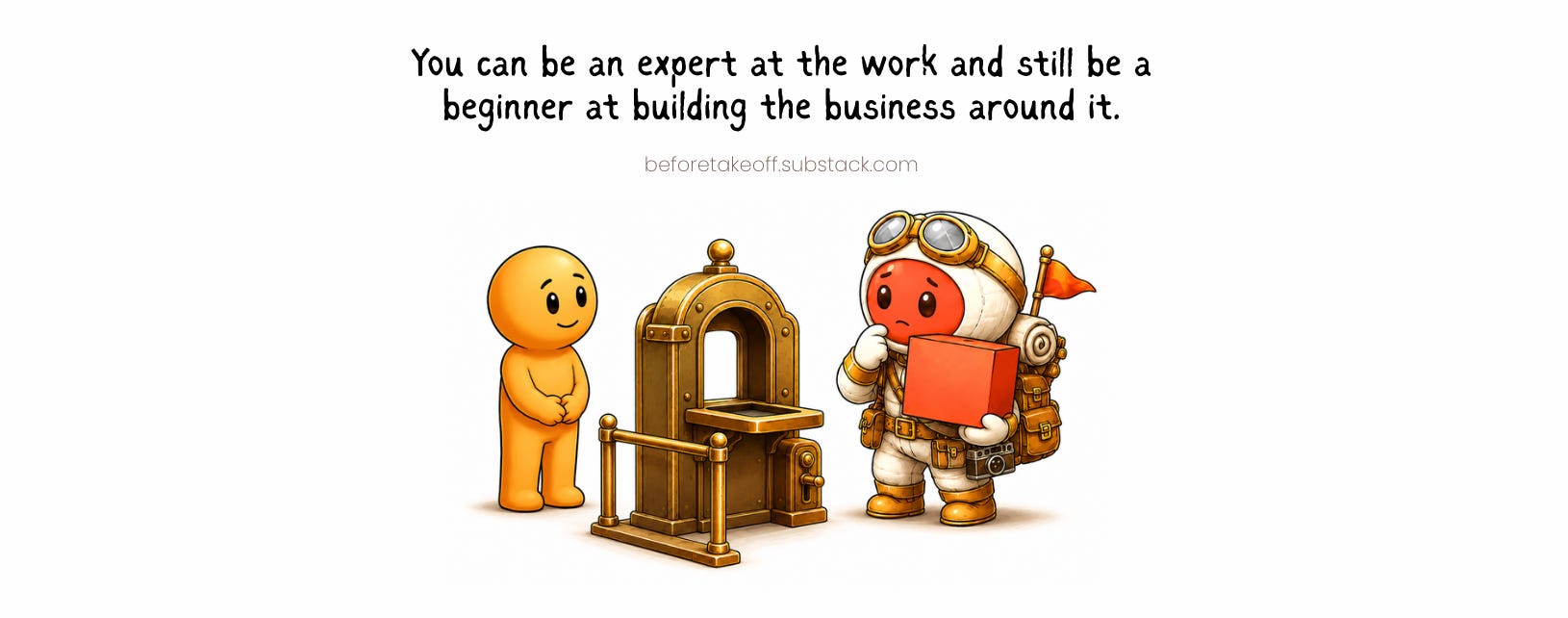
You can be highly experienced in the work and also a beginner at running the business that supports the work.
Entrepreneurship Needs You to Master Several Roles at Once
Most career progressions reward specialisation. Early-stage entrepreneurship needs that but across multiple roles, not just a single role.
Experience or not, a founder often needs to handle customer research, brand positioning, online marketing, direct sales, pricing, fundraising and cash flow management, technology, operations, recruitment, and more.
While you do not need to master every role, your budding business can stall when an unfamiliar responsibility becomes the main constraint as you are unable to contribute effectively.
During times like these, capable founders often retreat into their zone of competence.
You may
keep refining the product when the business needs customer conversations
create more content because direct outreach feels uncomfortable
continue customising every customer engagement because it’s how you’re used to operating as an outsourced consultant
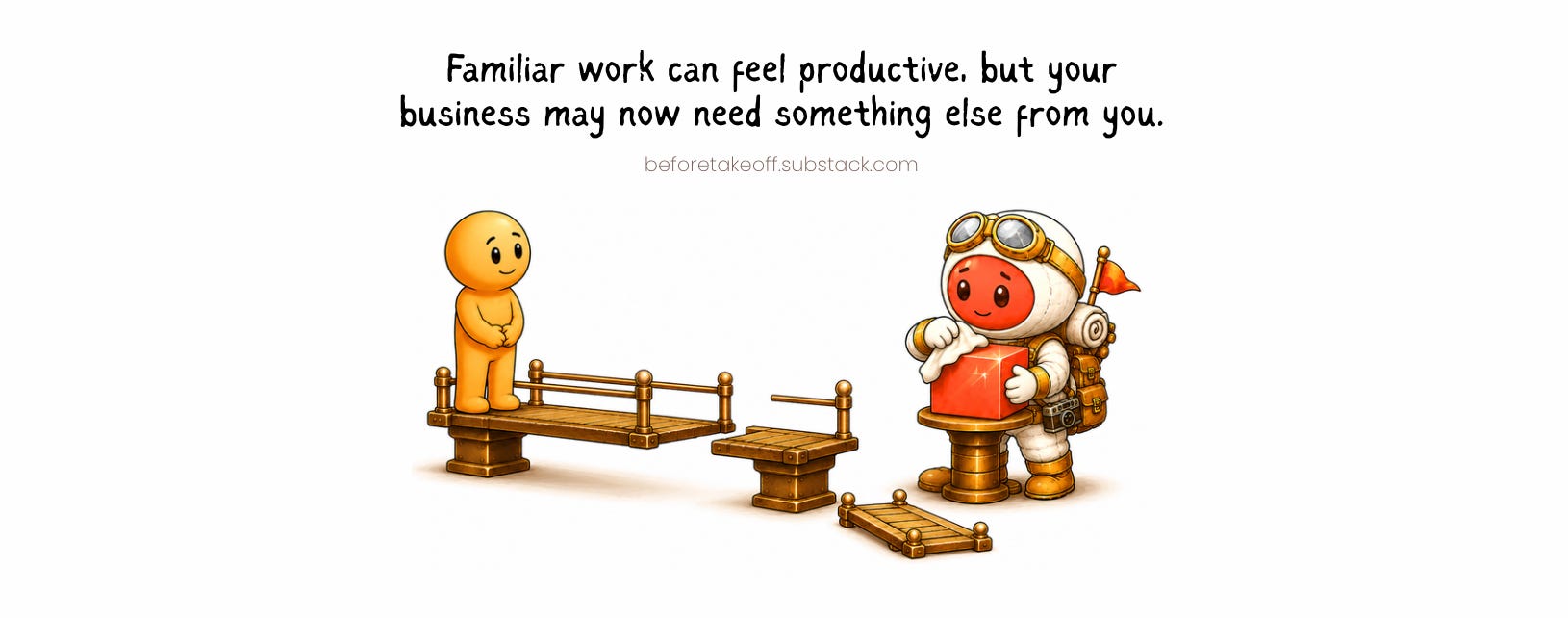
The work can feel productive because you know how to do it, but it may not be the work your business most needs at its current business stage.
2. Past Success Can Misguide You in a Different Business Model
Founders bring experience, habits, and success patterns from previous roles and businesses. Some transfer well. Others only worked because of the environment they came from.
A consultant launching a low-cost digital product may assume strong expertise will create sales. But that model may depend more heavily on distribution, immediate visible value, and a low-friction buying decision.
A founder moving from services into SaaS may focus on winning customers while underestimating onboarding, activation, continued usage, and retention.
Someone experienced in e-commerce may enter a membership business and assume acquisition will create growth, when the business model also needs recurring reasons for members to return and stay.
A former corporate leader may prioritise detailed planning, brand architecture, and future systems before the business has enough customers to justify them. That approach may have worked for an established organisation, but an early-stage business often needs direct market learning first.
The mistake is assuming that every part of your past experience transfers to your new business venture.
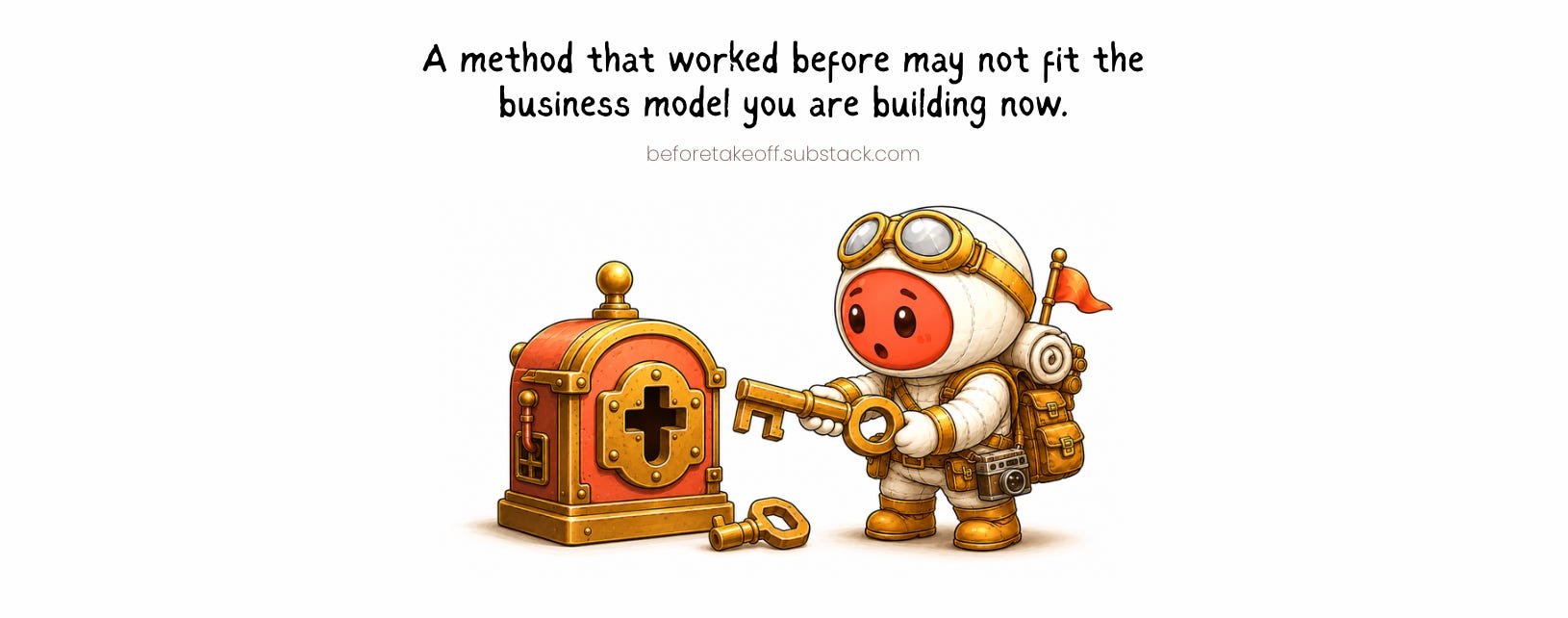
Judgment, discipline, problem-solving, relationships, and industry knowledge may remain powerful advantages. A familiar acquisition method, pricing structure, sales process, delivery model, or definition of progress may not be applicable if the business model is different.
Every business model has different economics, customer behaviour, trust requirements, and growth mechanics. Experience becomes useful when you adapt it to the model you are now building.
Every Stage Makes You a Beginner Again
As the business evolves over time, the founder’s job keeps changing.
Broad customer conversations may help uncover a painful problem, but they will not automatically produce a sellable offer.
Personal relationships may help win the first few customers, but they may not create a dependable revenue pipeline.
Customised delivery may help you learn quickly, then become exhausting and unprofitable when operations hit a wall as customer numbers grow.
Founder energy may activate an early community, but retention eventually requires value that does not depend on you constantly generating momentum.
Employee-turned-entrepreneurs often get surprised by the following turn of events. You:
become competent at creating the solution, then need to learn how to sell it.
begin winning customers, then need to learn how to serve them consistently.
improve delivery, then encounter pricing, retention, distribution, capacity, or systems.
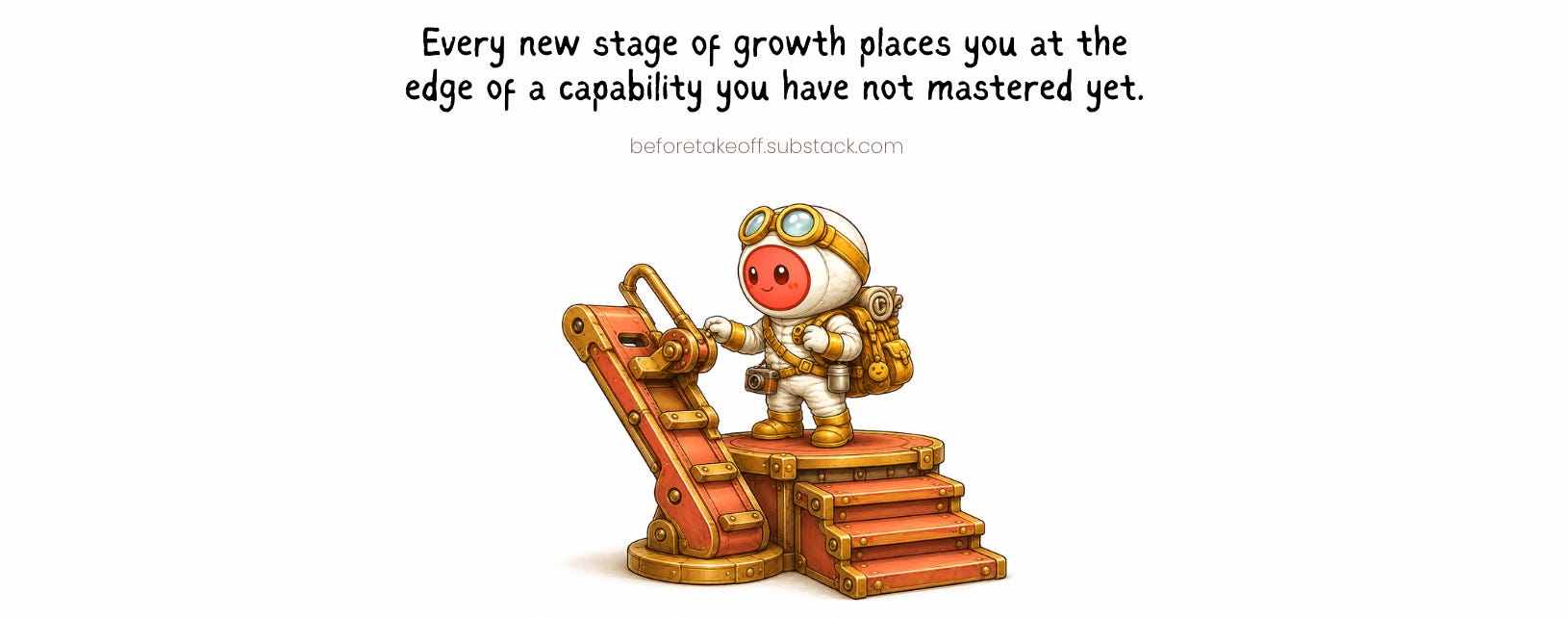
Feeling less capable is typically a sign that you have reached the next capability frontier of your business.
3. Flying Solo Removes the Scaffolding Supporting Your Ability
Founders often compare their current performance with what they achieved in previous work without factoring in the support they had around that high performance.
They may have had a recognised company name, existing customers, specialist colleagues, established processes, technology and operations support, a marketing budget, established playbooks to follow, and managers who helped set priorities.
Now every unanswered question or responsibility returns to one same person.
Flying solo means that the founder must decide what matters, do the work, judge the result, and decide what happens next. Apart from carrying more load, they are also constantly switching between different kinds of thinking and operating.
Even if the founder is competent across the different roles and activities, they can still underperform when their attention is fragmented across too many roles.
Bootstrapping Changes the Game, Not Only the Speed
One of the biggest misconceptions is that bootstrapping only means slower progress.
A funded company may hire specialists before revenue exists, test multiple channels, buy distribution, absorb failed experiments, and keep building while another team handles sales.
A bootstrapped founder usually has far less room for error. Progress may be funded through savings, client work, or inconsistent early revenue. One poor decision can consume months of runway, resulting in the end of the business.
This means the strategy must change.
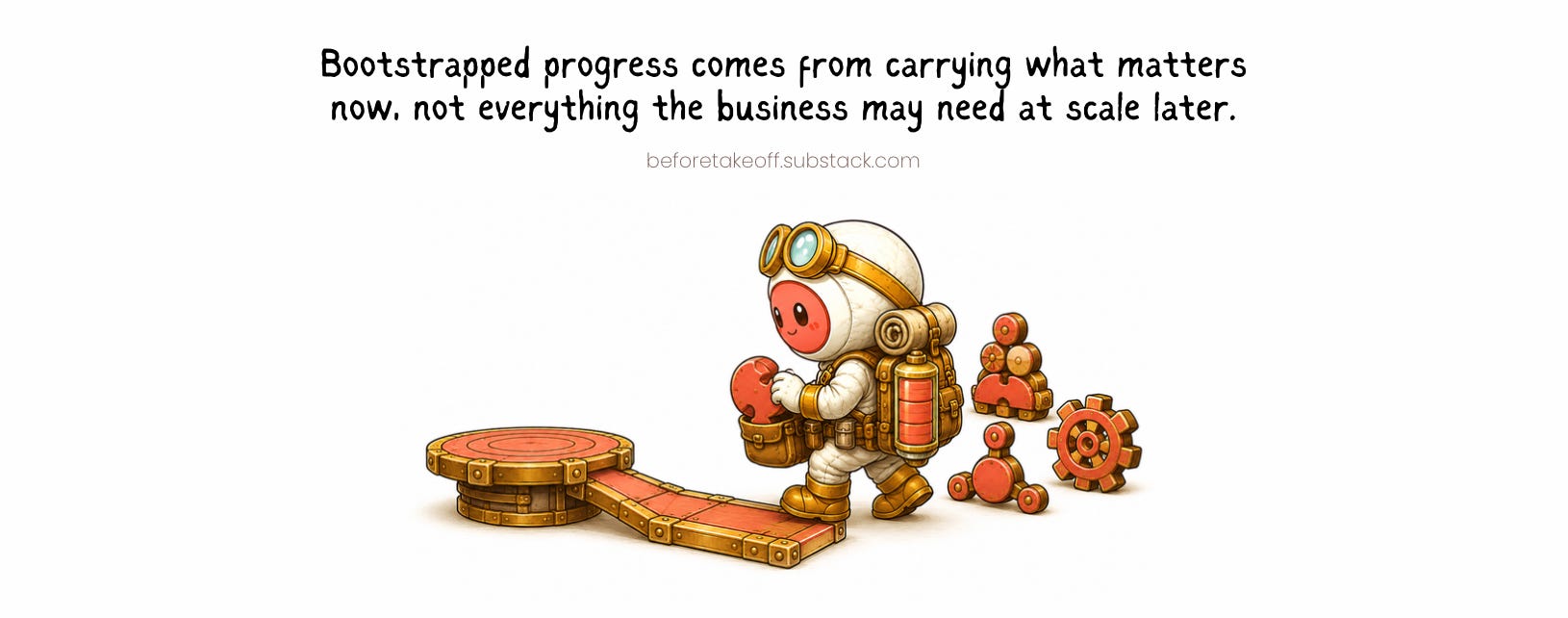
You may need one primary customer, offer, and path to market rather than several promising bets. And instead of paid distribution such as paid ads and partnerships, you may need to borrow trust and distribution through strategic partners, communities, referrals, or marketplaces.
You may also need to keep the business deliberately simple if you want it to have a chance to survive. Every new feature, customer segment, service tier, and marketing channel creates another maintenance burden for the founder to carry.
A solo-led, bootstrapping business can look slower than a funded startup. That said, it can still be making far better decisions for the resources it has.
Feeling Less Capable Can Make You Fix the Wrong Problem
The danger is not only that entrepreneurship damages confidence, but that founders make poor business decisions in a bid to restore that confidence. They may:
Rebuild an offer before learning how to explain it.
Abandon a go-to-market channel because their first attempts were clumsy.
Add products to compensate for weak distribution.
Copy competitors with completely different teams, budgets, brands, and economics.
They may also keep forcing a method that worked before because their experience with that method once brought them success.
Before overhauling your business, diagnose the real blockers:
Is there a skill you need to develop further?
Are you applying assumptions from a different business model?
Has your business reached a new stage that requires a different approach?
Are your operating conditions unrealistic for one bootstrapped person?
These problems can feel similar, but they require different responses.
Learn the Business You are Actually In
Past success still matters. It can help you learn faster, make better judgments, build stronger relationships, and recover from mistakes.
But it does not exempt you from becoming a beginner again.
Entrepreneurship repeatedly places capable people at the edge of what they already know. The key is to identify which strengths still transfer, which assumptions may no longer fit, and what the current stage, model, and constraints now require from you.
Remember that you are in a different game from before, so it’s normal to learn how to play it. And even if past experiences help, they may not fully transfer.
🧠 If today’s article resonated, you may want to read these next:
How the Game Changes When You are a Solo Bootstrap Founder
The Four Kinds of Intelligence That Help a Solo Bootstrapped Business Survive Its Earliest Days
Flying Solo: Build a Business Ecosystem Before Building a Team
Hi Sylvia,
Thank you for following LifeArchitecture. I truly appreciate it. Your focus on helping founders build and grow with greater clarity, confidence, and judgment strongly resonates with the ideas behind my work.
If you feel LifeArchitecture is relevant and valuable, I would be honored if you subscribed as well.
Warmly, Agnes
Sylvia,
This is an important reminder that experience is valuable, but not automatically transferable.
What worked in one role, business model, or stage can become a limitation in another. I especially appreciated your point that capable founders often retreat into familiar work when the business actually needs them to develop a completely different skill.
Becoming a beginner again does not erase past success. It means learning how to adapt it to the business we are actually building now.
I’ve already subscribed because I value this practical approach to entrepreneurship. Since you already follow my work, I’d be very glad if you subscribed to LifeArchitecture as well.
Warmly, Agnes